
Understanding Moisture Barriers
When you’re planning Kent ground floor installations, moisture barriers are your first line of defence against damp problems. A damp proof membrane (DPM) is a water proof sheet that stops moisture from entering your home through the concrete floor. Without proper damp-proofing, even high quality carpets can be damaged within months.
At Kent Flooring, we’ve spent over 20 years protecting homes across the South East. Our floor fitting service always starts with proper moisture protection, because we know it’s the foundation of any successful flooring project.
Types of Damp Problems
Understanding damp helps you protect your home effectively. There are three main types that affect Kent properties:
Rising Damp This happens through capillary action, where moisture from the ground rises up through walls and floors. A damp proof course in walls and a damp proof membrane under floors work together to stop this. The solution varies depending on your property’s age and construction.
Penetrating Damp Rain and external moisture can come through walls, especially in older buildings. This often shows up near the skirting board or at ground level. Proper external drainage and wall protection prevent this issue.
Damp Condensation This forms when warm air meets cold surfaces. Good ventilation and insulation help control condensation, particularly in bathrooms and kitchens.
Building Regulations Requirements
The Planning Portal sets out clear rules for ground floor protection. All Kent ground-floor installations must meet these standards:
- Damp proof membranes must be at least 1200 gauge thick
- The DPM must connect with the damp-proof course in the walls
- The DPC should sit 150mm above ground level
- All joints must overlap by 100mm minimum
- Seams need sealing with waterproof tape
These regulations protect your home and ensure your flooring installers deliver work that lasts.
Different Types of Flooring and Moisture Protection
All types of flooring need protection from moisture, but requirements vary:
| Flooring Type | Protection Needed | Special Notes |
|---|---|---|
| Carpet | 1200 gauge DPM | Needs moisture-resistant underlay |
| Luxury Vinyl | 1200 gauge DPM | Naturally water resistant |
| Laminate | 1200 gauge DPM | Sensitive to moisture |
| Wood Flooring | 1200 gauge DPM | Requires stable conditions |
| Ceramic Tiles | 1200 gauge DPM | Use waterproof adhesive |
The Professional Installation Process
At Kent Flooring, our flooring installers follow a proven method for Kent ground floor installations:
Surface Preparation We start with a level, compacted base. Any sharp stones get covered with sand to protect the membrane from punctures.
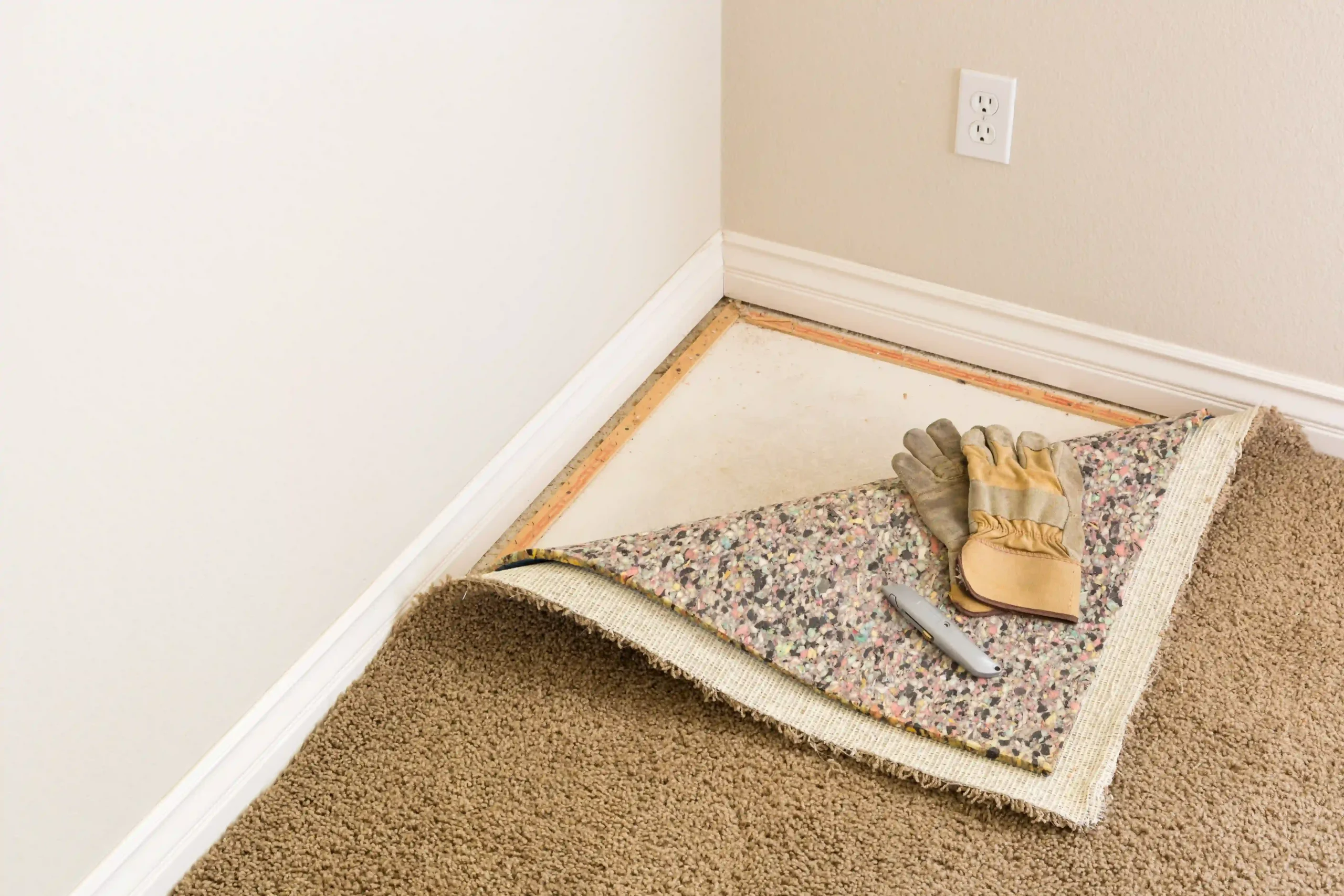
Installing the Damp Proof Membrane The membrane rolls out across your concrete floor, similar to laying carpet. We cut it carefully, leaving enough to fold up the walls and connect with the damp-proof course. This creates one continuous barrier stopping moisture from entering your home.
Sealing Joints Where sheets meet, we overlap them by at least 100mm. Every joint gets sealed with waterproof tape. Even tiny gaps can let moisture through, so we’re thorough.
Connecting to Walls The membrane folds up the walls to meet the damp-proof course. This connection is critical. We make sure it reaches above the skirting board level for complete protection.
Final Layers Once the moisture barrier is secure, we add insulation and screed. Only then does your chosen flooring solution go down.
Common Mistakes That Cause Damp Problems
We’ve seen these errors cause issues across Kent:
- Using thin membranes below 1200 gauge
- Not sealing joints properly with waterproof tape
- Forgetting to connect the membrane to the wall’s damp-proof course
- Puncturing the membrane during other building work
- Skipping the membrane entirely with certain types of flooring
Professional flooring installers avoid these problems because we understand how moisture moves through buildings and the damage it causes.
Solutions for Existing Damp Problems
Already dealing with damp? We offer several options:
Epoxy Coatings These paint directly onto your existing concrete floor, creating a waterproof layer without removing the slab. They work well when old membranes have failed.
Surface Membranes New membranes can lay over problem floors before adding your chosen flooring solution. This fixes issues without major building work.
The right approach varies depending on your situation. Our floor fitting service includes a full assessment of your property’s needs.
Kent-Specific Considerations
Kent properties face particular challenges:
- Clay soil that holds moisture
- Coastal areas with salt exposure
- Older buildings with inadequate original damp-proofing
- High rainfall throughout the year
- Properties near rivers with high water tables
These factors make professional damp-proofing essential. Our team understands local conditions and specifies the right moisture barriers for your location.
Choosing Your Flooring Solution After Damp-Proofing
Once moisture barriers are in place, you can confidently choose from all types of flooring:
For Living Areas High quality carpets with moisture-resistant underlay create warm, comfortable spaces. Engineered wood offers natural beauty with better moisture stability than solid timber.
For Wet Areas Luxury vinyl and ceramic tiles handle moisture well and suit kitchens and bathrooms perfectly. Both work beautifully over properly installed moisture barriers.
For High Traffic Laminate offers durability at a good value, while luxury vinyl combines practicality with style.
Why Choose Professional Flooring Installers
Installing moisture barriers might look simple, but getting it right needs knowledge and care. Professional flooring installers understand:
- How do different types of flooring respond to moisture
- Building regulation requirements
- How to seal and connect membranes properly
- Which products deliver high-quality results
- How to spot potential problems before they start
Kent Flooring has completed thousands of Kent ground floor installations. Our floor fitting service includes full moisture protection as standard, because we know it’s the foundation of flooring that lasts.
Get Expert Advice
Every property is different. The right damp-proofing approach varies depending on your building’s age, construction, and location. Whether you’re extending your home, renovating an older property, or dealing with existing damp problems, proper moisture barriers make all the difference.
Contact Kent Flooring for expert advice on your project. We’ll assess your property, explain your options clearly, and deliver a flooring solution that protects your investment for years to come.