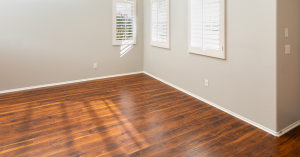


When considering flooring options for high-traffic commercial environments, business owners often explore laminate flooring as a cost-effective alternative to more expensive materials. At Kent Flooring, we regularly advise commercial clients on whether laminate flooring can meet the demanding requirements of busy business environments. The answer isn’t straightforward – whilst laminate has evolved significantly and offers certain advantages, its suitability for high-use commercial areas depends on several critical factors.
Understanding the distinction between residential-grade and commercial-grade laminate flooring is crucial when evaluating options for business applications. The performance characteristics, warranty terms, and expected lifespan differ substantially between these categories, making product selection essential for achieving satisfactory results in demanding commercial environments.
Understanding Commercial-Grade Laminate
Construction Differences
Commercial-grade laminate flooring differs significantly from residential products in its construction and performance specifications. The wear layer – the protective surface that determines durability – is typically thicker in commercial products, often measuring 0.8mm or more compared to 0.3-0.5mm in residential grades.
The core density is another distinguishing factor, with commercial laminates featuring high-density fibreboard (HDF) cores specifically engineered to withstand the constant loading and unloading stresses common in commercial environments. This enhanced core construction provides better dimensional stability and impact resistance than standard residential products.
AC Rating System
The AC (Abrasion Criteria) rating system provides standardised measurement of laminate flooring durability. Commercial applications typically require AC4 or AC5 ratings, which indicate suitability for general commercial and heavy commercial use respectively. These ratings are determined through rigorous testing of wear resistance, impact resistance, stain resistance, and other performance characteristics.
Products with AC4 ratings are suitable for moderate commercial use such as offices, boutique shops, and small restaurants. AC5-rated products can handle the most demanding commercial environments including large retail spaces, busy restaurants, and high-traffic public buildings.
Advantages of Commercial Laminate
Cost-Effectiveness
One of laminate flooring‘s primary advantages in commercial applications is its competitive pricing compared to alternatives like luxury vinyl, ceramic tile, or natural wood. This cost advantage extends beyond initial material costs to include installation expenses, as laminate’s click-lock systems often reduce labour requirements compared to glue-down or mechanically fastened alternatives.
For budget-conscious businesses or those requiring large-scale flooring installations, commercial laminate can provide professional appearance without the substantial investment required for premium materials. This cost efficiency is particularly valuable for businesses operating on tight margins or requiring frequent renovations.
Installation Speed
Modern commercial laminate products feature sophisticated locking mechanisms that enable rapid installation with minimal disruption to business operations. This installation efficiency is particularly valuable for retail environments, restaurants, and other businesses where extended closure periods result in lost revenue.
The ability to install laminate flooring outside normal business hours or in phases allows businesses to maintain operations whilst upgrading their facilities. This flexibility provides significant practical advantages over materials requiring extended curing times or specialised installation conditions.
Design Versatility
Contemporary commercial laminate products offer extensive design options that can complement virtually any commercial interior design scheme. High-definition printing technologies create remarkably realistic wood, stone, and tile effects that provide upscale appearance without premium material costs.
The variety of plank sizes, tile formats, and decorative options available in commercial laminate allows businesses to create distinctive brand environments that support marketing objectives whilst maintaining practical functionality.
Limitations in High-Traffic Applications
Moisture Vulnerability
Traditional laminate flooring’s susceptibility to moisture damage represents a significant limitation in many commercial environments. The HDF core can swell and delaminate when exposed to standing water or high humidity levels, leading to permanent damage that requires replacement rather than repair.
Whilst newer waterproof laminate products address this concern to some extent, they often compromise other performance characteristics such as dimensional stability or cost-effectiveness. Businesses in moisture-prone environments such as restaurants, healthcare facilities, or areas with frequent cleaning requirements may find laminate unsuitable.
Repair and Replacement Challenges
Unlike luxury vinyl or carpet tiles that allow targeted replacement of damaged sections, laminate flooring typically requires larger area replacement when damage occurs. This characteristic can be particularly problematic in high-traffic commercial areas where localised wear or damage is common.
The interconnected nature of laminate planks means that replacing damaged sections often requires disturbing adjacent undamaged flooring, increasing repair costs and disruption. For businesses requiring frequent maintenance or updates, this limitation can outweigh initial cost savings.
Sound Transmission
Hard surface laminate flooring can contribute to noise issues in commercial environments, particularly multi-storey buildings or open-plan offices. Whilst acoustic underlayments can mitigate some sound transmission, they add cost and installation complexity whilst not completely eliminating the issue.
Businesses prioritising acoustic comfort for employees or customers may find laminate flooring unsuitable without significant additional investment in sound-dampening measures.
Suitable Commercial Applications
Office Environments
Modern office spaces represent one of the most suitable commercial applications for high-quality laminate flooring. The controlled environment, moderate traffic patterns, and absence of moisture concerns make offices ideal for commercial laminate installation.
The professional appearance and comfort underfoot provided by quality laminate flooring can contribute to positive workplace environments whilst maintaining budget-friendly operation costs. The variety of wood-look options available allows offices to create warm, welcoming atmospheres that support employee satisfaction and client impressions.
Retail Boutiques
Small to medium-sized retail environments with moderate traffic levels can successfully utilise commercial-grade laminate flooring. The design flexibility and cost-effectiveness allow retailers to create attractive shopping environments without substantial flooring investments.
However, careful product selection is crucial, with AC4 or AC5 ratings essential for even moderate retail applications. Retailers should also consider traffic patterns, ensuring that high-wear areas such as entrances and checkout zones receive appropriate attention during installation planning.
Educational Facilities
Schools and training facilities represent growing markets for commercial laminate flooring, particularly in administrative areas, libraries, and classrooms. The combination of professional appearance, cost-effectiveness, and relatively straightforward maintenance makes laminate attractive for educational budgets.
However, high-traffic corridors, cafeterias, and gymnasiums typically exceed laminate flooring’s performance capabilities and require more robust alternatives.
Superior Alternatives for High-Traffic Areas
Luxury Vinyl Flooring
For most high-traffic commercial applications, luxury vinyl flooring offers superior performance compared to laminate whilst maintaining competitive costs. The waterproof construction, repairable nature, and enhanced durability make luxury vinyl more suitable for demanding commercial environments.
Luxury vinyl’s ability to handle moisture, heavy equipment, and constant traffic whilst maintaining appearance makes it the preferred choice for restaurants, healthcare facilities, and busy retail environments where laminate would likely fail prematurely.
Commercial Carpet Tiles
In applications where acoustic performance and comfort are priorities, commercial carpet tiles often provide better overall value than laminate flooring. The modular design allows targeted replacement of worn sections, whilst advanced stain resistance and durability treatments enable use in surprisingly demanding environments.
Polished Concrete
For businesses seeking industrial aesthetics combined with maximum durability, polished concrete flooring offers unmatched performance in high-traffic applications. Whilst initial installation costs may exceed laminate, the longevity and minimal maintenance requirements often provide superior long-term value.
Making the Right Decision
Traffic Analysis
Accurately assessing traffic patterns and intensity is crucial for determining laminate flooring suitability. Consider not only the number of people using the space but also the type of traffic – wheeled equipment, high heels, or outdoor dirt and moisture tracked indoors all affect flooring performance differently.
Long-term Cost Considerations
Whilst laminate flooring offers attractive initial costs, consider the total cost of ownership including maintenance, repairs, and replacement frequency. In truly high-traffic commercial areas, more expensive alternatives often provide better long-term value through extended service life and reduced maintenance requirements.
Professional Assessment
At Kent Flooring, we recommend professional assessment of commercial flooring requirements before making final decisions. Our experience across diverse commercial projects enables us to provide realistic expectations about laminate performance in specific applications and recommend alternatives when appropriate.
Conclusion
Commercial-grade laminate flooring can be suitable for certain commercial applications, particularly offices, boutique retail spaces, and other controlled environments with moderate traffic levels. However, for genuinely high-traffic commercial areas, laminate’s limitations often outweigh its cost advantages.
The key to successful commercial flooring lies in matching material capabilities to actual usage requirements rather than simply seeking the lowest initial cost. At Kent Flooring, we help businesses evaluate their specific needs and recommend flooring solutions that provide genuine long-term value whilst meeting performance requirements.
When considering laminate for commercial use, invest in genuine commercial-grade products with appropriate AC ratings and professional installation. However, be realistic about performance expectations and consider superior alternatives when traffic levels or environmental conditions exceed laminate’s capabilities.