
If you’re considering ceramic tiling for high-traffic areas, its durability and low maintenance might catch your attention. Ceramic tiles boast a Mohs hardness rating of 7 or higher, making them resistant to wear and impact. They also offer a variety of textured finishes to improve traction, which is important in busy spaces. But what about the aesthetic appeal and cost considerations? And how does the installation process factor into your decision? These aspects might influence whether ceramic tiling truly meets your needs for both functionality and style. Let’s explore these factors further.
Key Takeaways
– Ceramic tiles with a PEI rating of 4 or 5 are ideal for high-traffic areas.
– Low water absorption rates (<0.5%) make ceramic tiles highly durable and moisture-resistant.
– A Mohs hardness rating of at least 7 ensures excellent scratch and wear resistance.
– Ceramic tiles require low maintenance, making them cost-efficient for long-term use.
– High-quality ceramic tiles can withstand constant foot traffic, maintaining both functionality and aesthetic appeal.
Durability of Ceramic Tiles
When evaluating the durability of ceramic tiles, it’s important to consider their resistance to wear, water absorption rates, and hardness ratings. Understanding these parameters helps you select tiles that can withstand high-traffic conditions without compromising on performance.
Impact resistance is a critical factor. You need tiles with high impact resistance to endure the constant foot traffic and occasional dropping of heavy objects. Typically, ceramic tiles are rated by the Porcelain Enamel Institute (PEI) scale which ranges from Class 0 to Class 5. For high-traffic areas, a PEI rating of 4 or 5 is ideal.
Moisture resistance is another essential consideration. Ceramic tiles should have low water absorption rates to prevent damage from spills or humidity. The American National Standards Institute (ANSI) specifies that tiles classified as ‘impervious’ have water absorption rates of less than 0.5%. These are highly recommended for areas prone to moisture.
Hardness ratings, measured by the Mohs scale, determine how well tiles resist scratches and abrasions. For high-traffic zones, aim for a Mohs rating of at least 7. This ensures the tiles can handle the wear and tear of daily use.
Maintenance Requirements
Selecting durable ceramic tiles is only part of the equation; comprehending their maintenance requirements guarantees they remain in top condition for years to come.
Effective cleaning techniques are paramount. Regular sweeping or vacuuming removes abrasive debris that could scratch the tile surface. Utilise a pH-neutral cleaner to avoid damaging the glaze, and remember to rinse thoroughly to prevent residue buildup. For stubborn stains, a diluted vinegar solution or a specialised ceramic tile cleaner works wonders without compromising the tile’s integrity.
Grout maintenance is equally essential. Grout, being porous, can harbour mould and mildew if neglected. Sealing the grout lines annually forms a protective barrier against moisture and contaminants. When cleaning grout, avoid harsh chemicals that can erode its structure. Instead, opt for a mixture of baking soda and water applied with a soft brush, ensuring you scrub gently to preserve the grout’s integrity.
Regular inspections are vital. Look for any signs of wear or damage, particularly in high-traffic areas where tiles and grout are subjected to more stress. Quick repairs prevent minor issues from escalating into costly replacements, ensuring your ceramic tiles remain pristine and durable.
Aesthetic Appeal
The aesthetic appeal of ceramic tiling in high-traffic areas hinges on selecting designs and finishes that not only complement the space but also withstand the rigours of daily use. You need to take into account the broad colour options available, ranging from neutral tones to vibrant hues, which allow you to match or contrast with existing decor.
High-traffic areas demand tiles that not only look good but also maintain their appearance over time; hence, selecting tiles with consistent colour throughout the tile body can be advantageous.
Pattern variety is another critical aspect. From intricate mosaics to large format tiles, the options are extensive. For high-traffic zones, opting for patterns that can disguise dirt and wear is essential. Geometric patterns, textured surfaces, and matte finishes can help in maintaining a fresh look despite heavy footfall.
Additionally, advanced digital printing technologies have expanded the design possibilities, enabling you to choose tiles that mimic natural stone, wood, or other materials, providing both aesthetic value and durability.
Cost Considerations
Understanding the cost considerations of ceramic tiling for high-traffic areas involves evaluating both initial installation expenses and long-term maintenance costs. When planning your budget allocation, you need to factor in the cost per square foot of ceramic tiles, which can vary widely based on quality and design. High-quality ceramic tiles can range from $5 to $15 per square foot, not including installation labour, which can add an additional $4 to $8 per square foot.
Cost efficiency is another essential element. Ceramic tiling offers excellent durability, reducing the frequency of replacement compared to other flooring options. However, initial installation requires skilled labour to ensure proper adhesion and alignment, which can add to upfront expenses.
In terms of long-term maintenance, ceramic tiles are relatively low-maintenance. They’re resistant to stains, scratches, and water damage, which means fewer costs related to repairs and upkeep. Regular cleaning typically involves simple sweeping and mopping, which keeps ongoing expenses minimal.
To conclude, when you balance the initial investment with the long-term maintenance savings, ceramic tiling proves to be a cost-efficient option for high-traffic areas, making it a smart choice for those looking to optimise their budget allocation.
Longevity and Wear
Guaranteeing the longevity and wear resistance of ceramic tiles in high-traffic areas involves evaluating their hardness rating, typically measured on the Mohs scale. When selecting ceramic tiles, aim for a Mohs hardness rating of 7 or higher, which indicates superior resistance to scratching and surface wear. Pay attention to the material composition, as tiles made from high-quality clay and mineral compounds tend to offer increased durability.
The surface texture of ceramic tiles also plays a crucial role in their longevity. Glossy finishes might look appealing but can wear down faster under constant foot traffic. Instead, opt for matte or textured finishes that not only provide better traction but also distribute wear more evenly across the tile surface.
Furthermore, the firing temperature during the manufacturing process affects the tile’s density and porosity. Higher firing temperatures result in denser, less porous tiles, which are more robust and less susceptible to cracks and chips.
Understanding these technical aspects ensures you select ceramic tiles that won’t just withstand the rigours of high-traffic areas but also maintain their aesthetic appeal over time.
Installation Process
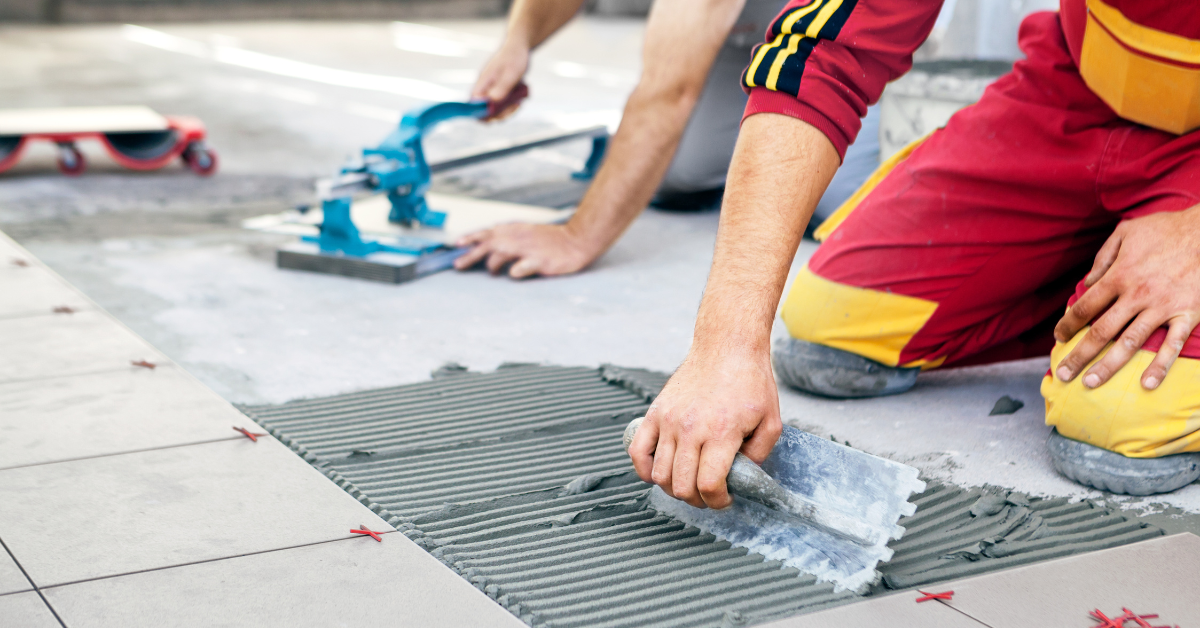
Proper installation is essential in maximising the performance and longevity of ceramic tiles in high-traffic areas. To guarantee a durable and long-lasting finish, you’ll need to focus on meticulous surface preparation and appropriate adhesive selection. Here’s what you should pay attention to:
- Surface Preparation: Start by ensuring the substrate is clean, dry, and level. Any debris, moisture, or unevenness can compromise the adhesion and lead to premature tile failure. Use a high-quality primer to seal the surface and enhance the bonding properties of the adhesive.
- Adhesive Selection: Choose an adhesive that’s specifically formulated for ceramic tiles and high-traffic applications. Opt for thin-set mortars with polymer additives, as they offer superior bond strength and flexibility. Make sure to follow the manufacturer’s instructions for mixing and application to achieve best results.
- Tile Layout and Spacing: Plan your tile layout meticulously, considering the room’s dimensions and traffic flow. Use spacers to maintain uniform gaps, which will ensure even grout lines and help accommodate thermal expansion and contraction. Proper alignment is crucial for both aesthetics and structural integrity.
Frequently Asked Questions
Are Ceramic Tiles Eco-Friendly and Sustainable?
You’ll find that ceramic tiles are eco-friendly due to their use of recycled materials. Their production involves moderate energy consumption compared to other materials, making them a sustainable choice for environmentally conscious construction projects.
How Does Ceramic Tile Compare With Other Flooring Options for Noise Reduction?
Imagine installing ceramic tiles in a bustling office. You’ll find ceramic tiles lack superior acoustic insulation, unlike carpet tiles, which act as soundproof barriers, reducing noise effectively. Ceramic tiles don’t absorb sound, leading to louder spaces.
Can Ceramic Tiles Be Installed Over Existing Flooring?
You can install ceramic tiles over existing flooring, but you’ll need to guarantee a smooth surface. The installation process involves selecting the right adhesive, considering factors like substrate compatibility and moisture levels for best bonding.
Are There Anti-Slip Ceramic Tile Options for High-Traffic Areas?
Absolutely, slip resistance is paramount for high-traffic areas. Think of anti-slip ceramic tiles as your safety net; they come with various durability ratings, ensuring both longevity and safety for bustling environments.
How Do Ceramic Tiles Perform in Terms of Temperature Regulation?
Ceramic tiles excel in temperature regulation due to their high thermal conductivity and efficient heat retention. They maintain a stable temperature, making them ideal for both heating and cooling systems, enhancing energy efficiency in high-traffic areas.
Conclusion
To summarise, ceramic tiling stands as a fortress in high-traffic areas, offering unmatched durability, minimal maintenance, and aesthetic longevity.
With its high Mohs hardness rating and low water absorption, it’s like the gold standard of flooring.
While the initial installation might require an investment, the long-term benefits in durability and reduced upkeep make it a cost-effective choice.
You’ll find that ceramic tiling not only meets but exceeds the demands of bustling environments.