
As the old saying goes, ‘All that glitters is not gold,’ and this adage holds true when comparing laminate flooring to hardwood flooring. You’re likely familiar with the sleek appearance of hardwood floors and their reputation for adding value to homes, but laminate flooring has carved out its niche in the market, offering a blend of durability and aesthetic appeal at a fraction of the cost.
However, before you make your decision, it’s crucial to weigh the pros and cons of each option. From the installation process, where laminate floors often offer easier and quicker methods, to maintenance and care, where hardwood demands more attention but rewards longevity. Durability considerations also play a key role, as do the aesthetic differences that set these two flooring types apart.
Lastly, a cost analysis might just tip the scales for you. Stick around to uncover which flooring option might best suit your lifestyle and budget, as we explore each of these aspects in detail.
Key Takeaways
– Laminate flooring is a more DIY-friendly and cost-effective option compared to hardwood.
– Hardwood flooring requires professional expertise and costly tools for installation.
– Laminate flooring is easier to clean and maintain compared to hardwood.
– Hardwood flooring offers the ability to be sanded and refinished, while laminate flooring does not.
Installation Process
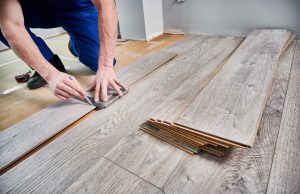
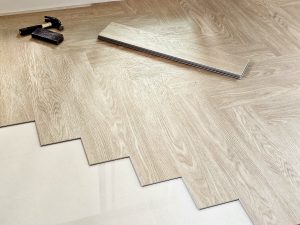
While both laminate and hardwood flooring enhance a room’s aesthetic, their installation processes differ significantly, with laminate offering a more DIY-friendly option. You’ll find that laminate floors don’t require the same level of skill or tools as hardwood. Starting with underlayment choices, laminate flooring often needs a specific underlay to not only insulate but also to level the floor and reduce noise. This contrasts with hardwood, where the underlayment can be more varied and sometimes isn’t necessary, depending on the type of hardwood and installation method.
For tool requirements, laminate installation is less demanding. You’ll typically need a saw to cut the planks, a tapping block, and a pull bar. These tools are relatively inexpensive and easy to handle. In contrast, hardwood flooring may require a pneumatic flooring nailer, a more costly and complex tool, alongside saws, hammers, and possibly a floor sander for finishing touches.
Understanding these differences is crucial. While you might tackle laminate flooring as a weekend project, hardwood installation often requires professional expertise due to its complexity and the precision needed for a flawless finish.
Maintenance and Care
After exploring the installation differences between laminate and hardwood flooring, it’s crucial to examine how their maintenance and care needs vary to ensure their longevity and aesthetic appeal.
When it comes to cleaning methods, laminate flooring offers a straightforward approach. You’ll typically use a dust mop or a vacuum designed for hard surfaces to remove debris. For deeper cleaning, a damp mop with a mild cleaner does the job without risking damage.
In contrast, hardwood flooring demands more precise care. Avoid excess water, which can warp the wood, and opt for specific hardwood cleaners that preserve the finish.
Repair techniques also differ significantly. Laminate flooring, consisting of a photographic layer atop a composite core, can’t be sanded down like hardwood. Deep scratches or damages often necessitate plank replacement.
Hardwood, however, allows for sanding and refinishing, offering a renewal option that can address wear and tear or aesthetic changes. This capability not only extends the life of hardwood floors but also enables customization over time.
Understanding these maintenance and care specifics is essential for selecting the flooring that best fits your lifestyle and preference.
Durability Considerations
You must consider the inherent durability of laminate and hardwood flooring to ensure your choice stands up to daily wear and tear. When it comes to scratch resistance, laminate flooring often holds an advantage. This is due to its top protective layer, designed to withstand impacts, scratches, and stains more effectively than most hardwood surfaces. Especially in high-traffic areas or homes with pets, laminate’s resistance to scratching can be a significant benefit.
However, when examining moisture sensitivity, the comparison shifts. Hardwood floors are known for their susceptibility to moisture and humidity. Prolonged exposure can lead to warping, swelling, or even rotting. In contrast, laminate flooring exhibits a higher tolerance to moisture, thanks to its composition and waterproof sealants. This makes it a more suitable option for areas like kitchens or basements where spills and moisture are more common.
Yet, it’s crucial to note that while laminate can resist moisture better than hardwood, it’s not entirely waterproof. Excessive water can seep into the seams, causing damage over time. Therefore, immediate clean-up of spills is advised to prevent any potential harm to the flooring.
Aesthetic Differences
Moving from functional comparisons, let’s examine how laminate and hardwood flooring differ aesthetically, an aspect that significantly influences home ambiance and value. When you’re choosing between laminate and hardwood, you’re not just selecting a flooring material; you’re deciding on the visual foundation of your room.
Laminate flooring offers an impressive colour variety, thanks to its manufacturing process, which involves high-resolution imaging of wood patterns printed onto the laminate surface. This technology allows for a wide range of hues and patterns, mimicking various wood types with astonishing accuracy. Whether you’re looking for a light, beachy vibe or a dark, elegant tone, laminate can provide it.
Hardwood, on the other hand, brings a natural beauty that’s hard to replicate. Its colour variety is inherently limited to the shades of the wood species it’s sourced from, but this limitation is also its strength. The natural grain and texture options of hardwood floors add a unique character to each plank, offering a depth of beauty that changes with the light and perspective. While laminate can mimic this look, the tactile sensation and warmth of real wood are distinct.
Cost Analysis
When considering laminate versus hardwood flooring, the initial cost and long-term investment are crucial factors to evaluate in your decision-making process.
Laminate flooring often presents a more cost-effective option upfront. It’s engineered from composite wood pressed together at high temperatures and topped with a photographic image of hardwood. This manufacturing process is less expensive than harvesting and milling hardwood, making laminate the budget-friendly choice for many homeowners.
However, you can’t overlook the resale value that hardwood floors can add to your property. Real hardwood floors are highly sought after for their durability and timeless appeal, potentially increasing your home’s market value significantly. While laminate flooring can mimic the look of wood, it doesn’t have the same longevity or ability to be refinished, factors that might affect resale value.
The environmental impact of your flooring choice also plays into the cost analysis. Hardwood floors are made from a natural, renewable resource. However, the sustainability of the source and the chemicals used in finishing can vary. Laminate floors, while using less wood, involve more synthetic materials, which mightn’t be as eco-friendly. Considering the environmental impact could influence your long-term satisfaction and the true cost of your flooring choice.
Frequently Asked Questions
Can Laminate and Hardwood Flooring Be Installed Over Existing Flooring Materials?
You can install laminate and hardwood floors over existing materials, cutting installation costs. Laminate offers more design versatility but considers the substrate’s condition for a successful install, ensuring durability and maintaining the floor’s technical specifications.
Are There Any Health Concerns Associated With Laminate or Hardwood Flooring, Such as VOC Emissions?
You’re navigating a maze of health concerns with laminate and hardwood flooring. Both can emit VOCs, potentially acting as allergy triggers. Moreover, cleaning chemicals used on these surfaces might also contribute to indoor air pollution.
How Do Changes in Humidity and Temperature Affect Laminate Versus Hardwood Flooring?
Humidity and temperature shifts can cause both laminate and hardwood floors to expand. However, laminate’s expansion risks are lower, making it easier to maintain. You’ll find hardwood requires more attention to prevent warping and damage.
Can Either Laminate or Hardwood Flooring Be Used in Outdoor Applications or in Rooms With High Moisture Levels Like Bathrooms and Kitchens?
You can’t typically use hardwood flooring in high moisture areas due to its low moisture resistance. However, laminate flooring, with its better moisture resistance, is more suitable for bathrooms, kitchens, and potentially outdoor spaces.
Is There a Significant Difference in the Acoustic Properties Between Laminate and Hardwood Flooring, Affecting Room Acoustics and Noise Levels?
You’ll find that hardwood floors, like a dense forest, absorb sound, offering better sound insulation against foot traffic. In contrast, laminate tends to echo, amplifying noises and impacting room acoustics significantly.
Conclusion
In conclusion, you’ve seen that laminate and hardwood have their own unique set of strengths and struggles.
Laminate leads in low-cost longevity and leisurely installation, while hardwood holds the high ground for its authentic allure and asset-adding advantage.
Maintenance-wise, laminate is less laborious, but hardwood’s hardiness harbours hope for centuries.
Deliberately deciding depends on dissecting these details—durability desires, aesthetic aspirations, and financial flexibilities.
Ultimately, understanding these underpinnings unlocks the ultimate flooring fit for your foundation.