

The sports hall is the most heavily used room in most schools. It hosts PE every period of the day, assemblies in the morning, exams in the summer, lunchtime clubs, evening lettings to local sports teams, and the Christmas production. No other floor in the building has to be a badminton court on Tuesday and a dining hall on Wednesday. Choosing the right surface means understanding what the hall is actually used for, not just what it was designed for.
This guide explains the two main types of sports hall flooring, what the relevant standards mean, and how to choose a surface that performs for sport without falling apart under chairs and tables. Kent Flooring UK fits sports hall and school flooring across Kent, London and the South East.
What a sports hall floor has to do
A good sports floor manages three things at once:
Shock absorption. The floor should give slightly under impact so that joints and ankles are protected during running, jumping and landing. A solid concrete floor with a thin covering does not do this, and injury rates rise on it.
Ball bounce and grip. The surface must return a consistent bounce for basketball and netball, and give enough grip for changes of direction without being so grippy that it causes twisting injuries.
Durability. It must survive scuffing, dragged equipment, chair legs and, in most schools, a level of use that competition-only venues never see.
These properties are tested against EN 14904, the European standard for indoor sports surfaces. The Sport England design guidance for sports halls sets out the recommended performance classes and dimensions, and it is the reference most local authorities and academy trusts use when reviewing a specification.
Area-elastic vs point-elastic: the two main systems
| Area-elastic (sprung timber) | Point-elastic (sports vinyl) | |
|---|---|---|
| Construction | Hardwood boards on a sprung batten or cradle system | Multi-layer vinyl with a foam or rubber backing, glued direct to the subfloor |
| How it flexes | The whole area around the foot deflects | Only the point of contact compresses |
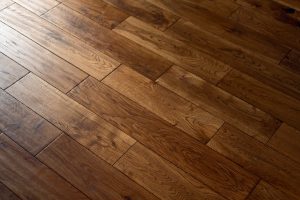
| Best for | Competition sport, basketball, indoor football, older pupils | Multi-use halls, primary schools, halls that double as dining or assembly space |
| Ball bounce | Excellent | Good to very good depending on thickness |
| Chairs and tables | Vulnerable to dents and scratches without protection | Copes well; resists point loads |
| Maintenance | Periodic sanding and re-sealing | Routine cleaning only |
| Build-up height | 60mm to 100mm | 5mm to 12mm |
| Lifespan | 25 years plus with refurbishment | 15 to 25 years |
A third category, combined-elastic (a point-elastic layer over an area-elastic base), gives the best of both but at a premium that is rarely justified for a school.
Which is right for your school?
Choose sprung timber if the hall is primarily a sports facility, if you host competitive fixtures, if you have a sixth form or a strong sports specialism, or if the hall is let to clubs in the evenings and weekends and that income matters. Timber floors are also the surface most PE staff prefer.
Choose sports vinyl if the hall is a multi-purpose space, if it is used for dining, exams or assemblies more days than not, if the school is a primary or infant setting, or if the existing subfloor cannot take the build-up height of a sprung system. Modern sports vinyl from Tarkett, Polyflor and Gerflor performs well for PE at primary and lower secondary level and is far more forgiving of a dropped chair.
For a wider view of how to approach the whole school, our guide to the top considerations for installing school flooring covers corridors, classrooms and wet areas alongside the hall.
Line marking and colour
Most school halls need markings for badminton, netball, basketball and five-a-side at minimum. On timber floors, lines are applied with a two-part polyurethane paint after sealing. On vinyl, they are either painted or, on some products, printed into the surface at manufacture. The standard approach is a colour hierarchy: the sport played most often gets the strongest colour, with secondary sports in lighter or dashed lines so the court is readable at a glance.
Think about the base colour too. Pale timber and light vinyl make a hall feel bigger and brighter, and reflect light well for exams and assemblies. Darker vinyl hides scuffs better but can make a low-ceilinged hall feel closed in.
Protecting a sports floor from non-sports use
The single biggest cause of sports hall floor damage is not sport. It is chairs, tables, staging and trolleys. If your hall doubles as a dining or assembly space, plan for it:
- Fit felt or rubber glides to every chair and table leg, and replace them on a schedule.
- Use a roll-out protective floor covering for exams, productions and events with heavy equipment.
- Keep a dedicated set of hall trolleys with soft, non-marking wheels.
- Ban outdoor footwear, or install effective entrance matting at the hall doors.
We fitted a multi-use sports vinyl at Herne Bay sports pavilion precisely because the space had to work for club sport, community events and functions, and the client did not want to manage a timber floor around all three.
Maintenance: what to expect
Sports vinyl needs daily dust-mopping, weekly damp cleaning with a pH-neutral cleaner, and periodic machine scrubbing. Avoid polishes, which reduce grip. Most products carry a 10 to 15 year guarantee if the cleaning regime is followed.
Sprung timber needs the same daily and weekly care, plus a light sand and re-seal every five to eight years depending on use, and a full sand and re-line every 15 to 20 years. Budget for this from the outset; a timber floor that is never refurbished will look tired within a decade and lose its grip.
Subfloor and building considerations
Before any sports floor goes in, the subfloor is tested for moisture and level. Timber systems need a dry, flat concrete base and enough ceiling height to accommodate the build-up without lowering door thresholds. Vinyl systems need a level surface, usually achieved with a latex screed. In older schools, the existing floor may contain asbestos-based adhesives or tiles, which need a licensed survey before removal.
We usually recommend surveying the hall a term ahead of the intended fitting window so that any subfloor work can be programmed into the holiday.
Talk to us about your school hall
We survey school sports halls across Kent, London and the South East, and can advise on whether timber or vinyl suits your hall’s real pattern of use. You receive a written specification against EN 14904, a line-marking plan, and a fitting programme that fits the holiday. Visit our school flooring page to arrange a visit.